A Realistic Plan to Stay Organized This Year
(That You’ll Actually Stick To)

Every January, I hear the same thing from clients and friends:
“This is the year I’m going to get organized.”
And every February, I hear this:
“I don’t know what happened…”
What happened is this: you tried to change everything at once.
After more than ten years as a professional organizer, I can tell you this with confidence—getting organized is not about buying the “right” bins, labeling your entire house in one weekend, or turning into a minimalist monk overnight. Staying organized is about having a plan that works with real life, not against it.
So if “get organized” is on your New Year’s resolution list, here’s how to set it up so it doesn’t quietly disappear by Groundhog Day.
Step 1: Stop Saying “Everything”
“I want to organize everything” is not a goal. It’s a recipe for overwhelm.
Instead, pick one problem area that affects your daily life. Ask yourself:
- What space annoys me the most?
- What area causes me stress almost every day?
- Where do I waste the most time looking for things?
Good starting points:
- The kitchen (especially cabinets or pantry)
- Paper piles
- Closets
- Entryway drop zones
You don’t need a whole-house makeover. You need a win.
Step 2: Define What “Organized” Actually Means to You
Here’s a secret most people don’t realize:
Organized does not mean “Pinterest-perfect.”
Organized means:
- You can find what you need
- You can put things away without thinking too hard
- Your system survives busy weeks and bad moods
If your goal requires folding laundry like a retail display or decanting every single item into matching containers… it probably won’t last.
Your system should match your habits, not your fantasy self.
Step 3: Create Simple Rules (Not Complicated Systems)
The best organizing systems are boring. That’s why they work.
Examples:
- Papers get dealt with once a week—no exceptions
- Shoes live only in one place
- If it doesn’t fit in the container, something has to go
- One in, one out (especially for clothes and kitchen gadgets)
Rules remove decision fatigue. When you don’t have to think, you’re far more likely to follow through.
Step 4: Schedule Maintenance Like an Appointment
Organization is not a one-and-done event. It’s more like brushing your teeth.
Instead of waiting until things “get bad,” schedule short, regular check-ins:
- 10 minutes at the end of the day
- 15 minutes once a week
- A monthly reset of one space
Put it on your calendar. Treat it like a real commitment—because it is.
Step 5: Use What You Already Have
You do not need to buy more stuff to get organized.
Before purchasing containers, baskets, or bins:
- Declutter first
- Repurpose what you own
- See how the space functions for a few weeks
Buying organizing products too soon is how people end up with beautifully labeled bins full of things they don’t actually need.
Step 6: Expect Mess (and Don’t Quit Because of It)
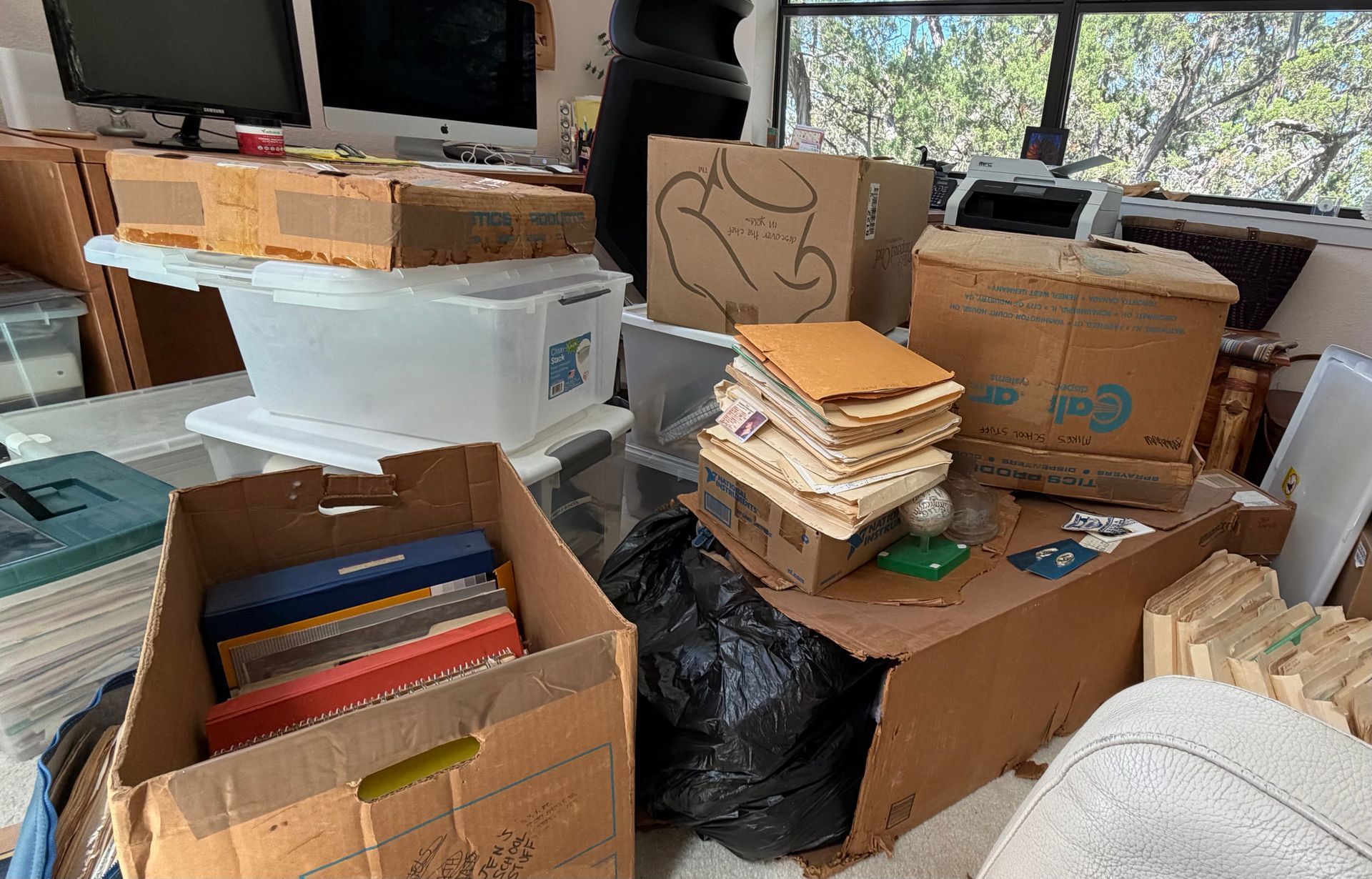
Life gets busy. People get sick. Laundry piles up. Mail happens.
Mess does not mean you’ve failed.
The goal isn’t perfection—it’s recovery time. An organized home isn’t one that never gets messy; it’s one that’s easy to reset.
If your system can’t handle real life, it needs adjusting—not abandonment.
Your New Year’s Resolution, Reframed
Instead of resolving to “get organized,” try this:
“This year, I will create systems that make my life easier.”
That’s a resolution worth keeping.
And if you need help decluttering or creating those systems? Well… that’s what professional organizers are for 😉
Happy New Year—and here’s to less chaos, fewer piles, and a whole lot more peace!